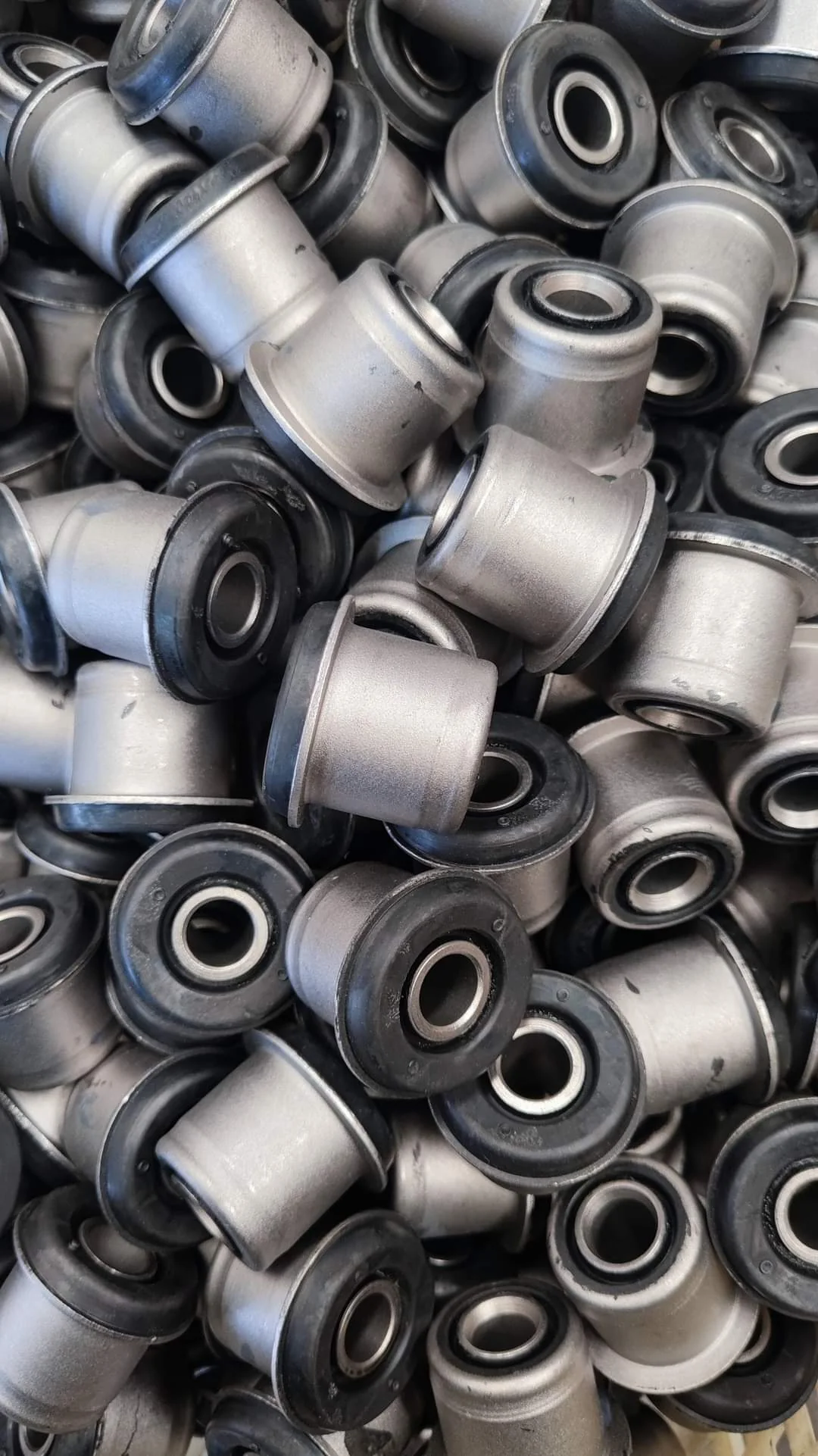
Lower Control Arm and Bushing Requirements
Lower control arm bushings connect the control arm to the vehicle chassis while allowing controlled movement through the suspension travel. Their design influences noise, vibration, steering stability and wheel alignment.
Identify the Lower-Arm Mounting Position
Start with the vehicle or assembly reference and the original part number or drawing revision. Identify the left or right side and the front or rear bushing position within the arm, where applicable. A lower control arm may use different bushes at its mounting points, so the phrase “lower control arm and bushing” alone is not enough to identify a part.
State whether the enquiry is for an individual rubber bush or a bonded rubber-to-metal bushing, and identify the required component separately from the complete arm assembly. A photograph can help locate the bush, but the part reference and specification are needed to assess the requirement.
Selection Considerations
Important factors include the housing size, sleeve dimensions, bushing profile, rubber hardness, load direction and expected operating conditions. For replacement and OEM requirements, matching the original geometry is essential for reliable fitment.
Dimensions and Construction to Confirm
- Reference: original part number, approved drawing and revision, or an identified sample.
- Mounting envelope: housing diameter, overall length and flange or shoulder profile.
- Sleeves: inner bore, outer diameter, individual sleeve lengths and any offset or orientation features.
- Fit requirements: dimensional tolerances and the specified interface with the arm housing and mounting fastener.
- Material and behaviour: specified rubber compound, hardness, metal requirements, load direction and required movement.
- Operating conditions: temperature range and relevant oil, weather or other exposure requirements.
Use nominal dimensions and tolerances from the approved specification where available. Measurements from a worn or damaged sample need review; dimensions and rubber hardness alone do not establish equivalent performance.
Individual Bush or Complete Arm Replacement?
This depends on the assembly design, the condition of the arm and whether the bush is serviceable separately. Confirm the correct part and follow the vehicle manufacturer’s repair instructions. This sourcing guide does not establish vehicle compatibility or replace installation instructions.
Applications
Control arm bushings are used in passenger vehicles, commercial vehicles and specialist automotive assemblies. Custom rubber-to-metal designs can be produced for specific arm designs and performance requirements.
Sample Approval and Purchasing Checklist
For OEM or custom development, agree the drawing revision, material specification, inspection requirements and sample-approval process before production. Where functional testing is required, define the method, load or movement conditions and acceptance criteria for the particular component.
Send the part reference, drawing or sample details, mounting position, required quantity and delivery destination with the enquiry. Identify any details still awaiting confirmation so they can be reviewed before quotation or tooling decisions.
Explore Maurflex Products
View our control arm bushings for OEM and replacement requirements. Related products include swing arm bushings and rubber bushes.