The rubber-to-metal bonding process joins an elastomer to a prepared metal insert. In adhesive-assisted moulding, the bonding system develops adhesion as the rubber cures around the insert. Successful manufacture depends on compatible materials, surface preparation, coating application and controlled curing.
Maurflex, the brand of Maurya Rubber Products in Ludhiana, Punjab, India, manufactures rubber-to-metal bonded components for automotive, industrial and trailer applications. Our manufacturing approach brings together component review, rubber compounding, metal preparation, moulding and inspection.
For buyers, the starting point is an agreed specification: the drawing or sample, application, materials, critical dimensions and required checks. The sequence below explains our rubber-to-metal bonding process. Individual operations and inspection requirements depend on the component design and the agreed production plan.
Rubber-to-Metal Bonding at a Glance
Metal preparationClean and prepare the insert; apply the selected bonding system.
Rubber preparationSelect, mix and check the compound for the component.
↓ Prepared metal and rubber come together
Mould & VulcaniseForm the component and develop the bond under specified conditions.
Inspect & TestAssess the part against its drawing and agreed inspection plan.
Pack & DispatchIdentify and protect the components for the agreed delivery.
Simplified process schematic, not a machine drawing. The detailed manufacturing route depends on the component and approved production requirements.
From Application Review to Dispatch
Rubber and metal preparation can proceed in parallel before the parts come together at moulding. The numbered stages show the overall manufacturing flow, not a single compulsory route for every component. Drawing revisions, material requirements and inspection criteria provide the reference for production review.
01
Application & Drawing Review
The review considers component construction, installation, load direction, movement and exposure to temperature, oils or chemicals. Drawings, samples and customer requirements help define rubber properties, metal details, dimensional tolerances and inspection needs before development or quotation. See our research and development approach for custom projects.
Tool design and selection.02
Tooling Development
Tool design translates the component requirements into moulds and production tooling. Development considers geometry, dimensional control and the proposed manufacturing route. Prototype review and tool trials, where required, help identify adjustments before production; tool maintenance supports repeat manufacturing.
Tool room and tooling development.03
Incoming Materials & Metal Inspection
Receiving checks consider the specified rubber grades, additives and metal components before use. Material identification, condition and relevant dimensions are reviewed against purchasing and production requirements. The material specification and agreed controls define the applicable inspection and sampling requirements.
Material storage.Metal inspection.
04
Rubber Grade & Compound Selection
Compound selection considers flexibility, hardness, loading and the operating environment. Requirements may involve NR, SBR, EPDM, NBR, CR, silicone, FKM, IIR or ACM; polyurethane components can also be discussed. Material suitability is reviewed for each enquiry, since similar-looking parts may require different properties.
Raw rubber selection.05
Compounding, Mixing & Calendering
Raw rubber is mixed with the specified fillers, curing ingredients and other additives to prepare the compound. The formulation and mixing route are selected for the required properties. Where the manufacturing route calls for sheet material, calendering prepares rubber to the required form for subsequent processing.
Rubber batch preparation.Mixing and calendering.
06
Rubber Batch Checks
Material checks support consistency before the compound enters the next production stage. Depending on the specification and inspection plan, assessment may include hardness, tensile strength, elongation or other required properties. The applicable tests, sampling and acceptance criteria should be agreed for the component and order.
Rubber material testing and inspection.07
Metal Turning, Stamping & Machining
Sleeves, inserts and other metal parts are prepared to the drawing using the relevant turning, stamping or machining operations. Where cast components are required, the supply route is considered during planning. Metal dimensions and fit affect the finished assembly, so these requirements are reviewed before bonding.
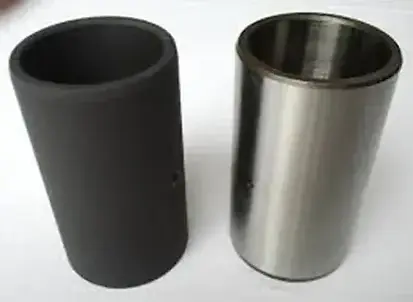
Metal turning and stamping.Metal tube preparation.
08
Metal Surface Preparation
Bonding surfaces are prepared to remove oils, dirt, rust and other contamination that can affect adhesion. The appropriate cleaning and surface-treatment route is selected for the metal and bonding system. Prepared parts require controlled handling to avoid recontamination before the adhesive stage.
09
Primer & Bonding Adhesive Application
A suitable bonding system is applied to the prepared metal before moulding. Primer, where required, and the bonding adhesive must be compatible with the rubber compound and metal. Application and drying conditions follow the selected system and production requirements; this stage is distinct from cleaning the metal surface.
10
Moulding & Vulcanisation
The prepared inserts and rubber compound are positioned for moulding. Controlled heat, pressure and curing time shape the rubber and support formation of the rubber-to-metal bond. Vulcanisation develops the rubber's elastic properties; the moulding and cure conditions depend on the compound, component geometry and production requirements.
Rubber moulding department.11
Testing & Final Inspection
Inspection considers dimensions, sleeve alignment, surface condition and visible defects against the approved drawing. Depending on the component and agreed inspection plan, verification may include hardness, load–deflection, pull-out, proof-load or endurance testing. Test methods, loading directions, loads, cycles and acceptance criteria are defined for the application. Read more about our quality control and testing approach.
Quality control and inspection.Material inspection.
12
Packing, Identification & Dispatch
Packing is planned around component size, handling and the delivery destination. Product identification, packaging details and any requested inspection documentation are considered during order review. Dispatch arrangements and the delivery schedule are agreed for the order, including requirements from overseas purchasing teams, importers and distributors.
Rubber-to-Metal Bonding: Technical Questions
These general engineering explanations help buyers prepare a specification. Material combinations, manufacturing methods and test arrangements must be confirmed for the individual enquiry.
Is chemical bonding the same as mechanical interlocking?
No. Adhesive-assisted chemical bonding creates adhesion between prepared metal and rubber, often during vulcanisation. Mechanical interlocking retains rubber through features such as holes or undercuts. A component may combine both approaches; the appropriate design depends on its loading and service conditions.
Which rubber and metal materials can be bonded?
Common material families include natural rubber, NBR or EPDM with steel, aluminium or brass. Compatibility is not automatic: the rubber compound, metal finish, bonding system, curing process and operating environment must be assessed together for the intended component.
Why can rubber-to-metal bonds fail?
Possible causes include contamination, inadequate surface preparation, uneven coating, insufficient drying, unsuitable curing conditions or excessive stress during demoulding. Examining where separation occurs helps identify the cause; changing adhesive alone may not resolve a process problem.
How is bond performance evaluated?
Depending on the geometry and requirements, evaluation may involve tension, peel, shear or a component-specific loading test. Results should record the test conditions and failure location, distinguishing rubber tearing from interface separation. Acceptance criteria must be agreed for the application.
This process supports enquiries for products such as silent block bushes and leaf spring bushings. The manufacturing route and inspection plan are reviewed for the specific design rather than assumed from a similar-looking component.
Discuss Your Manufacturing Requirement
For a technical review and quotation, share your drawing or sample details, application and operating conditions, required materials and tests, order quantity, and delivery destination. Contact Maurflex with your component requirements to discuss the next step.
For Our Process enquiries, use our contact form. Include your part details, application and required quantity so our team can review your requirements.