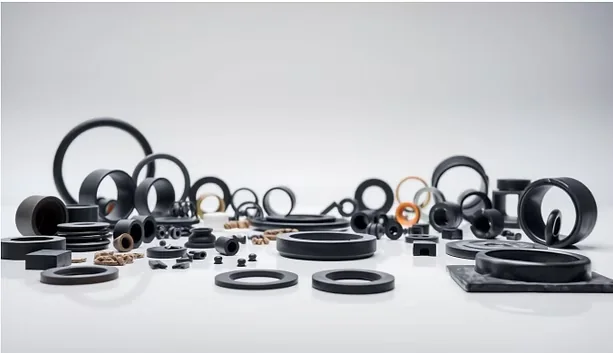
Rubber Gaskets and Rubber Seals for Automotive and Industrial Applications
Rubber gaskets and rubber seals are essential components for controlling leakage, pressure, vibration and contamination in automotive and industrial equipment. Although both are used for sealing, the correct design depends on the joint type, operating temperature, media, compression and material requirement.
What Is the Difference Between a Rubber Gasket and a Rubber Seal?
A rubber gasket seals the space between two stationary mating surfaces, such as flanges, covers, housings and inspection plates. A rubber seal is generally designed for moving or enclosed interfaces, including shafts, covers, doors, fluid systems and equipment joints. Selecting the correct component improves service life and reduces maintenance.
Materials for Rubber Gaskets and Seals
Material selection must match the application. EPDM is often selected for weather and water resistance. Nitrile rubber (NBR) is commonly used where oil and fuel resistance is important. Silicone can be suitable for wide temperature conditions, while neoprene and Viton may be selected for specific chemical, heat or environmental requirements. Final material selection should be confirmed against the operating conditions.
Custom Manufacturing for OEM Requirements
Maurflex manufactures components to drawings, samples and technical specifications. Buyers can provide dimensions, hardness, material grade, operating temperature, media exposure, tolerance requirements and quantity. This supports reliable custom production for automotive, industrial, agricultural and engineering applications.
Choose the Correct Product Page
Explore our rubber gaskets for custom flat, profile and application-specific gasket requirements. For molded sealing components, view our rubber seals page. For a quotation, share your drawing or sample together with the material and performance requirements.
Key Checks Before Ordering
- Application and sealing surface design
- Material compatibility with oil, water, chemicals or heat
- Hardness and compression requirements
- Dimensions, tolerances and quantity
- Testing or inspection requirements
Well-specified rubber components help OEMs and industrial buyers achieve dependable sealing performance and repeatable production quality.
For custom sealing requirements, explore our custom molded rubber products.