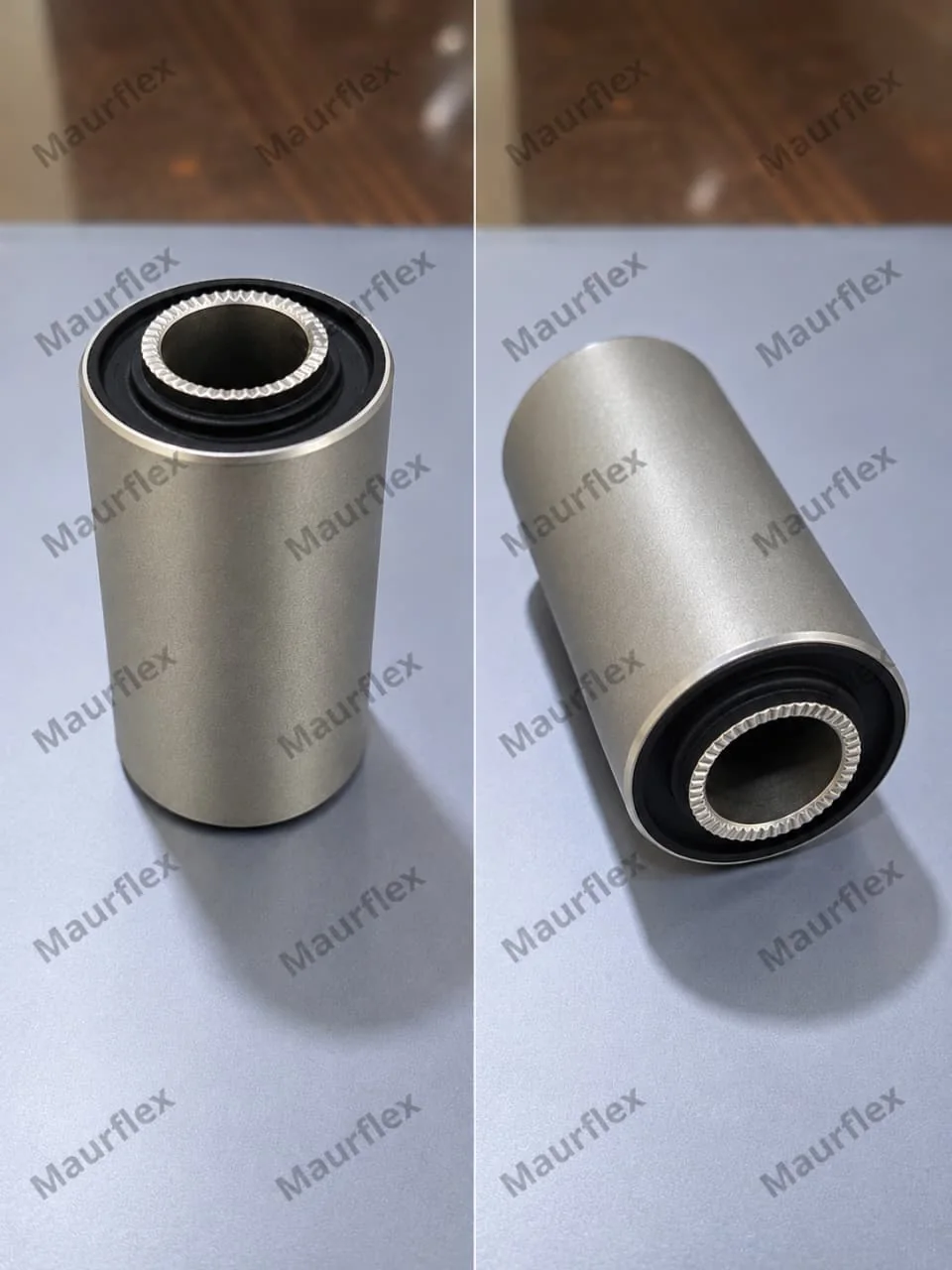
Buying leaf spring bushings from a manufacturer in India starts with an agreed component specification. Importers, distributors and vehicle-component buyers need a shared reference for the part, the inspection requirements and the shipment. A useful enquiry for Maurflex leaf spring bushings connects those details before price or delivery arrangements are confirmed.
Separate catalogue identification from drawing-based supply
If an existing item appears relevant, use the Leaf Spring Bushes catalogue to identify the entry. Quote its item number, application label and listed dimensions, then add the original part reference and mounting position. Catalogue photographs help a discussion but do not establish interchangeability with every vehicle carrying the same model name.
For a drawing-based requirement, send the drawing number and revision. Identify which dimensions and tolerances control fitment, the sleeve arrangement and any flange, offset or orientation features. If a sample is supplied, record its reference and condition. Agree which approved document defines production; a used sample should not silently replace a controlled drawing.
Describe the vehicle and operating conditions
State whether the bush is intended for a spring eye, shackle or another defined suspension mounting. Include the vehicle or trailer model and suspension reference where known. Explain the application using available engineering information, including loading direction, required movement, operating temperature and exposure to water, oil or outdoor conditions.
Do not estimate a bushing load rating simply by dividing a truck's gross weight between its bushes. The assembly geometry and operating conditions matter. If a functional requirement is not yet defined, identify it as open for review rather than filling the enquiry with an assumed value.
Agree the material and inspection plan
Provide the specified rubber compound, hardness requirement and metal details where available. Separate the material requirement from the finished component's behaviour. Hardness, dimensions, rubber-to-metal adhesion and load response answer different questions; a single hardness value is not a complete approval specification.
Before an order is confirmed, list the checks and documents the buyer requires. Depending on the component specification, the discussion may include dimensional and visual inspection, hardness, sleeve retention, bond evaluation or load-deflection requirements. Agree the method, sampling, test conditions and acceptance criteria, together with which reports are included. Do not assume that an enquiry automatically includes every possible test.
The rubber-to-metal bonding and testing guide explains why the compound, metal preparation, bonding process and verification need to be considered together.
Define sample approval and changes
If sample evaluation is part of the purchasing process, agree what the buyer will assess and who can approve the result. Record the approved drawing revision, sample identification and inspection findings. Fitment evaluation and functional validation should follow the buyer's engineering requirements for the actual assembly.
Resolve discrepancies before moving to the next stage. A changed sleeve length, different material or revised tolerance can affect the approved specification. Keep an identifiable revision record with the quotation and purchase order so the manufacturer, buyer and inspection team work from the same requirements.
Make quantities and packaging unambiguous
State the quantity per part number and distinguish an initial requirement from a forecast. If ordering sets, describe the contents and the number of sets. Ask for tooling or development requirements, commercial terms and the proposed schedule to be stated in the quotation for the particular part.
Discuss packing that protects the rubber and metal surfaces during the planned handling and transport. Specify required part identification, batch references, pack quantities and carton labels. Where the receiving warehouse uses its own reference or barcode format, provide it before packing is agreed. Confirm any special preservation or storage instructions for the component.
Confirm the destination and shipment responsibilities
Give the delivery country, postcode and receiving address or named destination needed for the quotation. Agree transport arrangements and who handles the relevant shipment documents and import formalities. Duties, classification and destination requirements depend on the actual transaction and should be reviewed with the buyer's customs or logistics adviser.
Check that the agreed part descriptions, quantities and package identification are consistent across the order and shipment paperwork. Establish which commercial invoice, packing information and any requested origin or inspection documentation will accompany the consignment. Required documents and delivery terms are confirmed for the order; a product enquiry does not establish a delivered price or an import approval.
Build one complete enquiry package
Send the drawing or catalogue reference, application, dimensions, material requirements, quantity and destination together. Add required inspection records, sample approval steps and packaging instructions. Mark unknown details clearly so they can be resolved during review.
For a replacement enquiry, include the mounting position and sample condition described in the leaf spring bushing selection guide. Contact Maurflex with your component requirements so the specification and commercial arrangements can be discussed for the individual order.